
Affiliate disclosure: This article contains affiliate links. If you buy through them, we may earn a commission at no extra cost to you.
Can lack of sleep cause weight gain? Yes, it can make weight gain more likely for many people. Poor sleep does not add pounds by magic, but it can push appetite hormones, cravings, late-night eating, blood sugar control, stress, and daily activity in the wrong direction. One short night is not the issue. The problem is the pattern: too little sleep, too often, while your body keeps asking for fast energy.
The good news is that sleep is one of the most practical weight-control levers to fix. You do not need a perfect routine. You need a repeatable one that gives your body enough time to recover, regulate hunger, and wake up with fewer cravings.
Can lack of sleep cause weight gain? The short answer
Lack of sleep can contribute to weight gain because it changes the way your body handles hunger, fullness, energy, and impulse control. The Centers for Disease Control and Prevention says adults should get at least 7 hours of sleep per night. When you regularly fall short, your body tends to act like it is under strain.
Get Weekly Health Tips
Join thousands getting evidence-based wellness insights delivered free every week.
🔒 No spam. Unsubscribe anytime.
That strain can show up as stronger hunger, lower patience around food, more snacking, and less motivation to move. You may still be eating the same breakfast and dinner, but the extra calories often sneak in around the edges: a sweet coffee, a second snack, bigger portions, or eating while tired at night.
Struggling with sleep and late-night cravings?
Sleep Lean is a sleep-support supplement made for adults who want a calmer nighttime routine while working on weight goals.
Affiliate link. Results vary. This is not medical advice.
Why poor sleep can raise hunger
Sleep and appetite are tied together. When sleep is short, the body may produce signals that make food feel more rewarding. Research has linked sleep restriction with changes in appetite hormones, including ghrelin and leptin. Ghrelin is often described as a hunger signal. Leptin helps signal fullness. When those signals are out of balance, it is easier to feel hungry even when your body does not need more calories.
This is one reason tired people often crave calorie-dense foods instead of plain protein, vegetables, or fruit. The tired brain wants quick fuel. Cookies, chips, sweet drinks, and heavy takeout all answer that call quickly. They also make it easy to overshoot your daily intake before you realize what happened.
If this sounds familiar, it may help to read our guide on how to stop sugar cravings at night. Night cravings are rarely just a willpower problem. They often come from a mix of poor sleep, skipped meals, stress, and habit loops.
Can lack of sleep cause weight gain through late-night eating?
Yes, late-night eating is one of the clearest ways short sleep can affect weight. Staying awake longer creates a bigger eating window. If dinner ends at 7 p.m. but bedtime slips from 10:30 p.m. to 1 a.m., that is two and a half more hours where snacks can happen.
Late-night eating also tends to be less planned. Most people are not cooking a balanced meal at midnight. They are grabbing something easy. That can be fine once in a while, but a nightly pattern adds up.
There is also a behavioral piece. Fatigue lowers friction. You may know what you planned to do, but the tired version of you has less energy to follow through. That is why a practical sleep plan matters. It removes some decisions from the hardest part of the day.
If you wake up tired even after a long night in bed, read why you may wake up tired after 8 hours of sleep. Sleep length matters, but sleep quality matters too.
Sleep loss can change blood sugar and energy
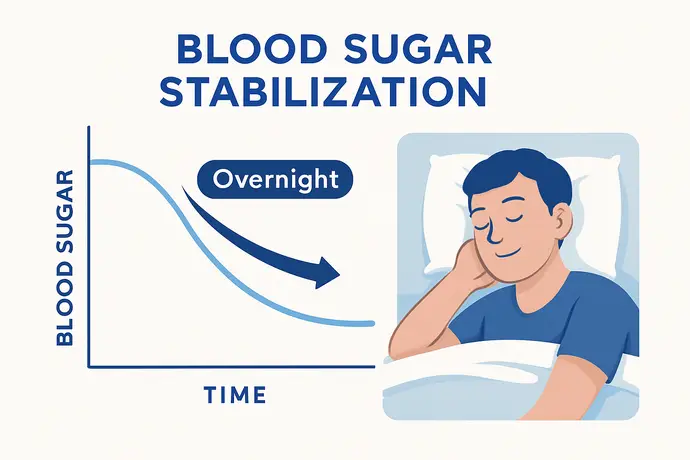
The National Heart, Lung, and Blood Institute notes that sleep deficiency is linked with several health problems, including obesity and diabetes risk. One reason is that poor sleep can affect how the body uses insulin. When insulin sensitivity drops, blood sugar control can become less steady. That can leave you feeling tired, hungry, and more likely to reach for fast carbs.
This does not mean one bad night causes a metabolic problem. It means repeated short sleep can create a rough internal environment for weight control. You may feel hungrier, move less, and recover worse from workouts. Your body is trying to get through the day, not optimize fat loss.
Morning habits can help here. Light exposure, hydration, protein at breakfast, and a short walk after meals can all support a steadier rhythm. For more on that angle, see our guide on whether drinking water in the morning can support metabolism.
A better night can make the next day easier
If poor sleep keeps pulling your appetite off track, Sleep Lean may fit into a broader routine of consistent bedtimes, dimmer evenings, and smarter meals.
Affiliate link. Use supplements only as part of a healthy routine.
Sleep debt can reduce daily movement
Weight gain is not only about food. It is also about energy output, and tired people usually move less. You might skip a walk, cut a workout short, take the elevator, or spend more of the day sitting. These tiny choices do not feel dramatic, but they can shrink daily calorie burn over time.
This is where sleep becomes underrated. A good night can make normal healthy choices feel less forced. You have more patience to cook. You are less likely to hunt for sugar at 3 p.m. You may actually want to walk after dinner. None of this is flashy, but it works because it is repeatable.
What to do if sleep is affecting your weight
Start with the basics for seven nights. Pick a realistic bedtime and protect it. Stop caffeine at least 8 hours before bed if you are sensitive to it. Keep dinner satisfying, with protein and fiber, so you are not negotiating with hunger at 10 p.m. Dim screens or use strong blue-light reduction in the last hour. Keep the room cool and dark.
Do not turn sleep into another stressful project. If you miss the target, reset the next night. The goal is consistency, not perfection.
Also look for patterns. If you wake up often, snore loudly, gasp for air, or feel exhausted after a full night in bed, talk with a clinician. Sleep apnea and other sleep disorders can interfere with weight and health, and they deserve proper evaluation. If your main problem is waking in the middle of the night, our guide on why you keep waking up at 3 a.m. may help you narrow down common causes.
Can lack of sleep cause weight gain even if you eat healthy?
It can. Eating healthy helps, but sleep loss can still make portions creep up and cravings feel louder. A healthy diet is easier to follow when your sleep is steady. If your meals are already solid and your weight is still moving up, check your sleep window, wake time, alcohol intake, evening snacking, and weekend schedule.
One useful test is simple: for two weeks, keep your food routine mostly the same but move your bedtime earlier by 30 to 45 minutes. Track hunger, cravings, steps, and energy. If those improve, sleep was probably part of the problem.
Ready to support your sleep routine?
Sleep Lean is worth reviewing if your weight goals are being dragged down by restless nights and inconsistent sleep.
Affiliate link. Not intended to diagnose, treat, cure, or prevent disease.
Bottom line
Can lack of sleep cause weight gain? For many people, yes. Short sleep can increase hunger, extend the time available for snacking, reduce daily movement, and make blood sugar control feel less steady. You do not need to fix everything at once. Start by making sleep easier to repeat: a steadier bedtime, a calmer last hour, a dark room, and enough time in bed to get at least 7 hours.
Weight loss gets harder when your body is tired. Give sleep the same respect you give food and exercise, and the rest of your plan usually becomes easier to follow.