
Affiliate disclosure: This article contains affiliate links. If you buy through these links, we may earn a commission at no extra cost to you.
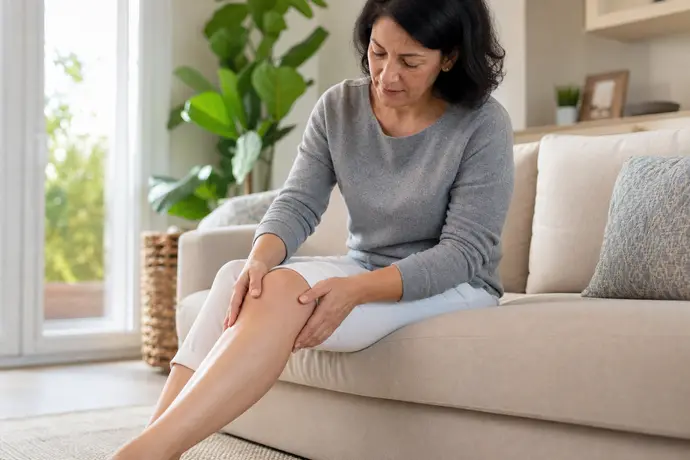
Knee pain after sitting with legs bent is common because that position puts the knee in deep flexion. The kneecap has to press against the front of the thigh bone, the soft tissues around the joint stay shortened, and the first few steps afterward can feel stiff, sharp, or oddly weak.
Most of the time, this does not mean something dangerous is happening. It often points to irritated tissue around the kneecap, tight hips or quads, a cranky meniscus, early joint wear, or simply sitting in one position longer than your knee likes. The pattern matters: where the pain sits, how long it lasts, and whether swelling or locking shows up.
Why knee pain after sitting with legs bent happens
When your knee is bent, the kneecap tracks through a groove at the front of the femur. That is normal. The issue is load. Deep bending increases pressure behind the kneecap, especially if your feet are tucked under you, your knees are crossed tightly, or you sit on a low couch with your knees higher than your hips.
Get Weekly Health Tips
Join thousands getting evidence-based wellness insights delivered free every week.
🔒 No spam. Unsubscribe anytime.
That pressure can irritate the patellofemoral joint, which is why people often describe pain in the front of the knee, around the kneecap, or just behind it. The American Academy of Orthopaedic Surgeons notes that patellofemoral pain can be aggravated by sitting with the knees bent, stairs, squatting, and kneeling. In plain English: bent-knee positions can annoy the front of the knee even if nothing is torn.
Want extra daily joint support?
JointVive is a supplement option some readers compare when knee stiffness keeps showing up during everyday routines.
Affiliate link: we may earn a commission at no extra cost to you.
There are other possibilities too. A tight quadriceps muscle can pull on the kneecap. Tight hips can change the angle of the thigh and make the knee do extra work. A meniscus issue may feel more like catching, sharp joint-line pain, or pain with twisting. Arthritis may feel stiff at first and then ease as you move, although it can flare after too much activity.
Common causes of knee pain after sitting with legs bent
Patellofemoral pain is one of the most common explanations when pain sits around or behind the kneecap. It often shows up after long sitting, stairs, squats, running, or kneeling. You may feel a dull ache, a grindy sensation, or a brief sharp pain when standing.
Quad and hip tightness can make the first few steps after sitting feel rough. If your thigh muscles, hip flexors, or glutes are not moving well, the knee can take more strain than it should. This is especially noticeable after desk work, long drives, flights, or sitting with one leg folded under the body.
Meniscus irritation is more likely if the pain is deep inside the joint or along the inner or outer joint line. Bent-knee sitting can compress the meniscus, and twisting as you stand can make it worse. Locking, catching, sudden swelling, or a knee that gives way deserves a medical check.
Early osteoarthritis can also make the knee complain after stillness. MedlinePlus lists knee problems as a broad group that can include injury, arthritis, and mechanical issues. If stiffness is worse after rest and eases after gentle movement, joint wear may be part of the picture, especially after age 40 or after past knee injuries.
Bursitis or tendon irritation may be involved if the pain is more pinpoint. Pain below the kneecap can involve the patellar tendon. Pain over the front of the kneecap can come from kneeling-related irritation. Pain on the inner side can come from tendons or bursa tissue near the upper shin.
What to do when knee pain after sitting with legs bent starts
Start with the simplest fix: change the sitting position before your knee gets angry. Keep both feet on the floor when possible. Avoid sitting on your heels, tucking one foot under your body, or folding the knee deeply for long stretches. If you sit on a couch, use a pillow behind your back so your knees are not jammed into a tight angle.
Take movement breaks. Stand up every 30 to 45 minutes, straighten and bend the knee a few times, and walk for a minute. That small reset helps fluid move through the joint and gives the kneecap a break from constant pressure.
Use gentle range-of-motion work after sitting. Try ten slow knee bends while standing, ten heel raises, and a short walk before you judge how the knee feels. Do not force a deep squat right away. A knee that hurts after sitting usually wants gradual movement first, not a test of toughness.
Stretch the muscles that influence knee tracking. A standing quad stretch, hip flexor stretch, hamstring stretch, and calf stretch can all help if tightness is part of the problem. Keep each stretch mild and steady. Pain is not the goal.
Building a knee-friendly routine?
If you are already working on movement, hydration, and recovery, JointVive may be worth reviewing as part of a broader joint-support plan.
Affiliate link: we may earn a commission at no extra cost to you.
Strength matters more than stretching alone. If the pattern keeps coming back, work on the muscles that control the knee: glutes, quads, hamstrings, and calves. Straight-leg raises, wall sits in a comfortable range, side-lying leg lifts, step-ups, and glute bridges are common starting points. If any exercise causes sharp pain, back off and get guidance from a physical therapist.
How to tell if it is stiffness or something more serious
Stiffness after sitting usually improves within a few minutes of walking. It may feel annoying, but it should not make the knee buckle, lock, swell dramatically, or stop you from bearing weight. That is the line to respect.
Get checked sooner if the knee is swollen, red, hot, unstable, or painful after a specific injury. The NHS advises getting urgent help for severe pain, major swelling, deformity, or inability to move or put weight on the knee. You should also talk with a clinician if knee pain keeps returning for more than a couple of weeks despite reasonable home changes.
Pain location can give useful clues. Front-of-knee pain after sitting points toward kneecap irritation. Inner or outer joint-line pain points more toward meniscus or ligament involvement. Pain behind the knee may involve swelling, a cyst, or hamstring-related irritation. These are clues, not a diagnosis.
Small sitting changes that make a real difference
If your knee pain after sitting with legs bent happens at a desk, adjust the setup first. Keep knees around hip height or slightly lower. Place feet flat. Avoid perching on the front edge of the chair with knees tucked back underneath you. If your chair is too low, your knees stay bent more deeply than necessary.
In the car, move the seat back enough that your knee is slightly bent, not folded tight. On long drives, stop and walk before the knee gets stiff. On flights, straighten the leg under the seat when you can and do ankle pumps to keep the lower leg moving.
At home, watch the couch. Soft, low seats are comfortable until you try to stand up. If your knees are high and your hips sink, the joint stays compressed. A firmer cushion or an extra pillow can change the angle enough to help.
You may also want to read why joints hurt when you wake up if morning stiffness is part of the pattern, and joint pain after sleeping if the issue is worse after rest. For supplement basics, see our guide to joint support supplements.
When joint support fits into the bigger plan
Supplements should not be the first answer to knee pain. Mechanics come first: sitting position, movement breaks, strength, body weight if relevant, footwear, recovery, and medical evaluation when symptoms are not behaving. That said, some people like adding joint-support nutrients once the basics are in place.
Be realistic. A supplement is not a brace, physical therapy session, or diagnosis. It should not be used to cover up worsening pain. If you try one, give it a fair but honest window, track how your knee feels during sitting and standing, and stop if anything feels off.
Next step for everyday joint comfort
Small habit changes come first. For added supplement support, compare JointVive and decide if it fits your goals.
Affiliate link: we may earn a commission at no extra cost to you.
Bottom line
Knee pain after sitting with legs bent usually comes from pressure, stiffness, or irritation around the kneecap, but the details matter. Front-of-knee aching after long sitting is often manageable with better positioning, movement breaks, gentle mobility, and strength work. Swelling, locking, instability, injury-related pain, or symptoms that keep returning should be checked by a professional.
The practical move today is simple: stop sitting with the knee folded deeply for long stretches, stand before stiffness builds, and give the joint a few easy movements before asking it to do stairs or squats. Boring advice, yes. Also the kind that often works.
Research sources
- American Academy of Orthopaedic Surgeons: Patellofemoral Pain Syndrome
- MedlinePlus: Knee Injuries and Disorders
- NHS: Knee Pain
This article is for education only and is not a substitute for medical advice. See a qualified clinician for diagnosis or treatment decisions, especially if pain is severe, persistent, or linked to an injury.