
Affiliate disclosure: This article contains affiliate links. If you buy through these links, we may earn a commission at no extra cost to you.
Eye strain headache treatment usually starts with reducing the visual stress that triggered the headache in the first place. That means adjusting your screen setup, taking real eye breaks, improving lighting, managing dryness, and getting checked if pain is severe, one-sided, sudden, or keeps coming back. Most screen-related headaches are not dangerous, but they are also not something to ignore if they are frequent.
The tricky part is that an eye strain headache can feel like a normal tension headache. You may notice pressure around the forehead, sore eyes, blurry vision after long screen sessions, neck tightness, or a headache that builds after reading, driving, or working under glare. The right treatment depends on what is driving it.
Eye Strain Headache Treatment Starts With the Trigger
Eye strain is not one single problem. It is a cluster of symptoms that can happen when your eyes and focusing system work harder than they should. Long stretches of screen time are a common trigger, but they are not the only one. Reading small text, poor contrast, bright overhead light, dry air, uncorrected vision, and neck posture can all add up.
Get Weekly Health Tips
Join thousands getting evidence-based wellness insights delivered free every week.
🔒 No spam. Unsubscribe anytime.
A practical first step is to look at the pattern. Does the headache start after two hours at a laptop? After night driving? After switching between your phone and a large monitor? Does it improve when you step away from screens or blink more often? The pattern tells you where to start.
If your symptoms sound more like digital eye strain, this related guide on digital eye strain symptoms can help you compare the signs. If dryness is part of the problem, keep dry eyes natural remedies on your reading list too.
Building an Eye Support Routine?
Vision Breakthrough is an eye-health program some readers compare while working on screen habits, nutrition, and daily vision support.
*Affiliate link - we may earn a commission at no extra cost to you
Fix Your Screen Setup Before Reaching for Pain Relief
For screen-related eye strain, the fastest wins are usually physical. Move the screen so the top is at or slightly below eye level. Keep it about an arm's length away. Increase text size until you can read without leaning forward. If you are squinting, the setup is wrong.
Glare matters more than people think. A bright window behind your monitor can force your eyes to constantly adjust. A light source behind you can reflect off the screen. Either way, the fix is simple: change the screen angle, close the blind partway, or move the lamp. You want even light, not a glowing rectangle in a dark room and not a monitor fighting sunlight.
Then check contrast and brightness. Your screen should roughly match the room. If it feels like a flashlight, lower it. If you are straining to see gray text, raise contrast or use a cleaner reading mode. Small changes here can take a surprising amount of load off your eyes and neck.
Use the 20-20-20 Rule, But Make It Real
The common advice is to look 20 feet away for 20 seconds every 20 minutes. It is useful, but only if you actually shift focus. Looking at another tab does not count. Looking across the room at a wall for three seconds barely counts.
Try this instead: every 20 to 30 minutes, look out a window or across the room long enough for your eyes to relax. Blink slowly a few times. Roll your shoulders down. Let your jaw unclench. This turns a tiny eye break into a nervous-system reset, which matters because many eye strain headaches are mixed with neck and scalp tension.
If you forget breaks, do not trust willpower. Use a timer, a calendar nudge, or an app. The best treatment is the one you will repeat on a normal workday, not the perfect routine you abandon after lunch.
Dry Eyes Can Turn Eye Strain Into a Headache
When you stare at a screen, your blink rate often drops. Fewer complete blinks can leave the tear film unstable, which can make your eyes burn, blur, or feel gritty. Once vision gets blurry, you squint or lean closer. Then the forehead and neck start helping. That is how dry eyes can feed a headache.
Simple dry-eye support often helps: blink fully, take breaks, avoid air blowing directly at your face, and consider preservative-free artificial tears if dryness is frequent. If your eyes are red, painful, light-sensitive, or your vision changes, get medical advice instead of trying to manage it alone.
Hydration and sleep matter too, but they are not magic. Drinking water will not fix an outdated glasses prescription. Better sleep will not remove glare from your monitor. Treat the obvious triggers first.
Compare Vision Support Options
If you are already cleaning up screen habits, you may want to compare eye-health programs and see what fits your routine.
See the Vision Breakthrough Details
*Affiliate link - we may earn a commission at no extra cost to you
When Glasses or Contacts Are Part of Eye Strain Headache Treatment
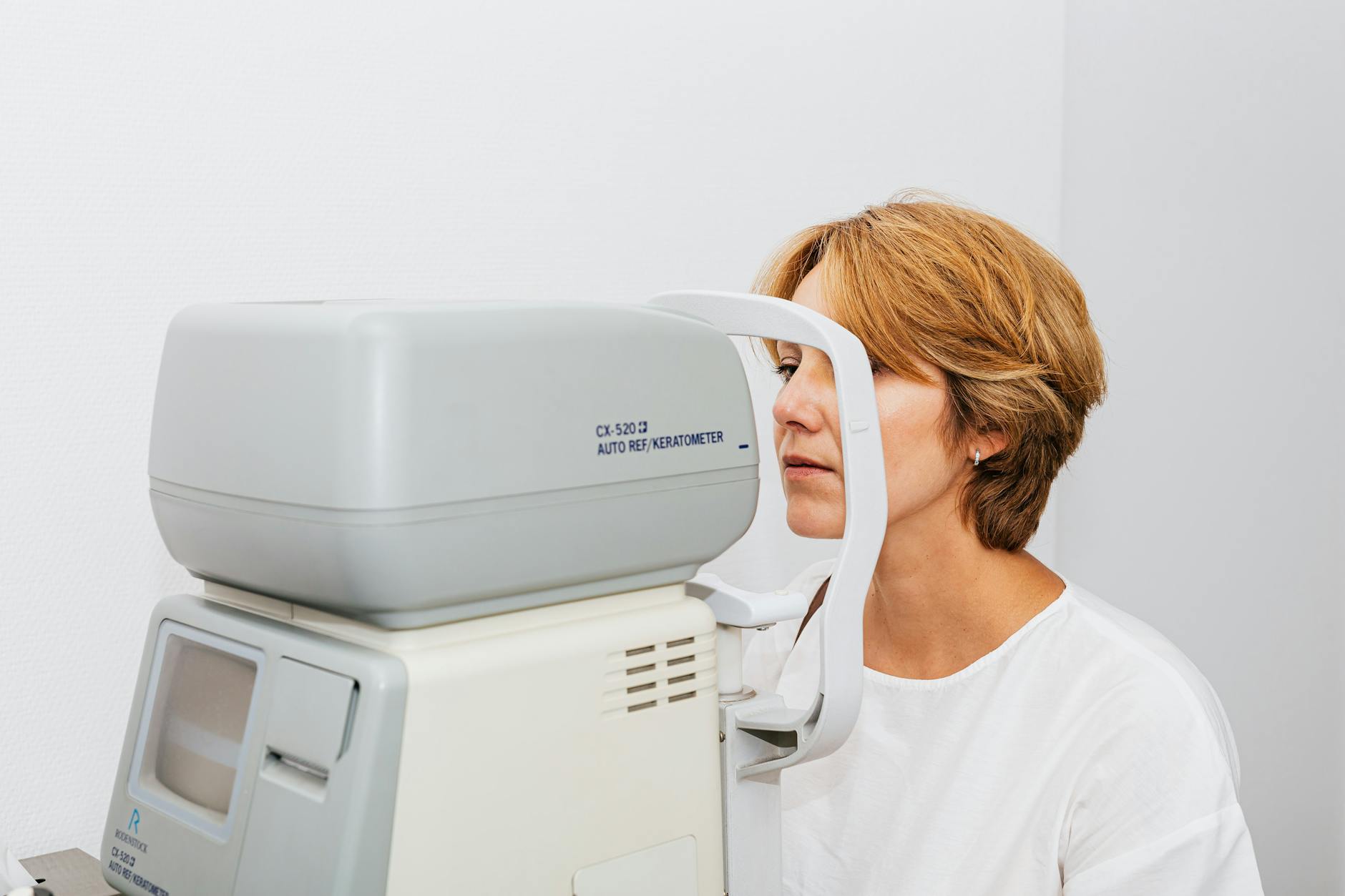
If headaches show up after reading, computer work, or night driving, an eye exam is worth it. Even a small prescription change can create strain when your eyes are forced to compensate all day. The same goes for old contacts, poorly fitting contacts, or reading glasses that are no longer strong enough.
Computer glasses can help some people, especially if their regular prescription is not optimized for screen distance. Blue-light lenses are more complicated. They may reduce discomfort for some users, but they are not a guaranteed headache treatment. Fit, prescription accuracy, screen distance, and glare control usually matter more.
If you notice trouble seeing at night, halos, or low-light problems, read this guide on vitamins for night blindness and talk with an eye professional. Night vision changes can have several causes, and some need proper evaluation.
Do Over-the-Counter Pain Relievers Help?
Over-the-counter pain relievers may help occasional headaches, but they do not solve the reason the headache started. They are a short-term tool, not the full plan. If you need them often, or if the headache keeps returning after screen work, treat that as a signal to fix the environment and schedule an eye exam.
Be careful with frequent use. Taking pain relievers too often can contribute to rebound headaches in some people. If you have liver disease, kidney disease, stomach ulcers, take blood thinners, are pregnant, or manage a chronic condition, ask a clinician what is safe for you.
Eye Strain Headache Treatment: A Simple Workday Plan
Start with the basics for one week. Set your screen at arm's length. Increase text size. Match screen brightness to the room. Remove glare. Take a real distance-vision break every 20 to 30 minutes. Blink fully when your eyes feel dry. Stretch your neck and shoulders twice a day.
Then track what happens. You do not need a complicated journal. Write down the time the headache starts, what you were doing, and what helped. If symptoms drop, you have useful evidence. If they do not, the next step is an eye exam and a broader headache evaluation.
Pay attention to morning symptoms too. If blurry vision is part of the picture, this article on what causes blurry vision in the morning may help you sort common explanations from red flags.
When to Get Checked Quickly
Most eye strain headaches are not emergencies. Still, some symptoms should not be self-treated. Get prompt medical care for a sudden severe headache, headache with weakness or confusion, eye pain with nausea, vision loss, double vision, new halos around lights, a red painful eye, headache after injury, or symptoms that are new and unusual for you.
Also get checked if your headaches are becoming more frequent, waking you from sleep, or forcing you to stop normal activities. Eye strain may be part of the story, but it is not the only possible cause of headache.
The Bottom Line on Eye Strain Headache Treatment
The best eye strain headache treatment is usually a stack of small fixes: better screen distance, less glare, bigger text, real breaks, dry-eye support, and an up-to-date eye exam. It is not glamorous. It works because it removes the strain instead of just chasing the pain after it starts.
If your headache clearly follows screen time, start with the workday plan above for a week. If pain is severe, unusual, or persistent, get checked. Your eyes should not have to fight your setup all day.
Want a Broader Eye-Health Routine?
Vision Breakthrough is worth comparing if you are researching daily eye support alongside better screen habits and regular eye care.
*Affiliate link - we may earn a commission at no extra cost to you